
TL;DR: Why Does It Take So Long to Rank on Google?
SEO takes time because Google builds trust slowly, not instantly
Most home service business websites see early movement in ~3 months, real trends in 3–6 months, and strong results in 6–12 months
Ranking delays come from authority, competition, and Google’s testing process, not just content quality
The biggest growth driver is consistent long-tail content + quality local backlinks + clear site structure
SEO compounds over time, meaning results accelerate the longer you stay consistent
Only ~1.74% of new web pages ever reach the top 10 in Google within a year. That number surprises most business owners the first time they hear it. It shouldn’t. Not because SEO is impossible. But because it is patient by design.
If you’ve been waiting a few weeks or even a couple of months and wondering why nothing is happening yet, you’re actually in the most normal stage of SEO. Not the failure stage. The early stage that no one explains properly.
Here’s what most people get wrong. They think Google ranks content the moment it is published. It doesn’t. It watches. It compares. It tests. And only then does it start to trust.
That means early SEO often feels like silence. A lot of effort. Very little feedback. Then, almost out of nowhere, things start to move.
I’ve seen this pattern repeatedly working with home service businesses. Especially HVAC, plumbing, and other local service companies where competition is high and trust matters even more. The first 90 days feel slow. Almost too slow. But something is happening underneath that surface.
Pages are being indexed. Keywords are starting to appear in impressions. Google is learning what your business actually does and who it should show you to.
And once that foundation is set, everything changes.
This article breaks down exactly why that delay happens, what is actually going on behind the scenes, and what realistic timelines look like if you want SEO to become a predictable lead source instead of a guessing game. More importantly, it will show you how to stop misinterpreting slow early progress as failure.
What’s actually happening when you publish a page
When you publish a new page on your website, nothing “visible” happens right away. But behind the scenes, Google starts a slow evaluation process.
First, your page has to be discovered. Then indexed. Then tested against other pages already ranking. Then evaluated based on performance signals over time.
That last part is where everything slows down.
Google is not just asking “Is this page relevant?” It is also asking:
Do users click it?
Do they stay on the page?
Does it actually solve the search intent better than existing results?
Does the website as a whole look trustworthy?
That evaluation does not happen instantly. It builds over time.
This is one of the biggest reasons SEO feels slow at the beginning.
Nothing is broken. It’s just not decided yet.
SEO is not a publishing system. It’s a trust system.
Most businesses think SEO is about writing blogs.
In reality, SEO is about earning trust from Google.
And trust is not a single signal. It is a combination of things like:
Your content quality, your backlinks, your internal linking structure, your consistency, and how users interact with your pages.
This is why two websites can publish the same article, and one ranks while the other disappears.
It’s not just what you publish. It’s who Google believes you are over time.
That belief takes time to build.
Why SEO feels slow in the beginning
Here’s the part most digital marketing agencies don’t explain clearly enough.
SEO has a lag phase.
You can do everything right and still feel like nothing is happening for the first 60 to 90 days.
That’s because early SEO is mostly invisible work:
Your pages are getting indexed. Google is starting to understand your site structure. Long-tail keywords may start appearing in impressions. But none of that feels like leads yet.
So most people assume:
“This isn’t working.”
But what’s actually true is:
“This hasn’t compounded yet.”
And that gap is where most businesses quit too early.
The snowball effect of SEO
SEO is one of the few marketing channels where results actually accelerate over time.
At Schulze Creative, we consistently see the same pattern with home service businesses:
Early on, progress feels slow. But once authority starts building, everything compounds.
Here’s what that looks like in real life:
Months 0–3: You are building the foundation. Pages are indexed. Early impressions show up. Some long-tail keywords begin appearing. But leads are inconsistent or minimal.
Months 3–6: Things start to move. Rankings begin appearing. You start getting traffic from specific searches like “emergency AC repair near me” or “how much does furnace repair cost.” This is usually when clients finally start to feel SEO working.
Months 6–12: This is where it becomes real. Multiple pages start ranking. Traffic stabilizes. Leads become predictable. SEO stops feeling like a project and starts acting like a system.
The key idea here is simple:
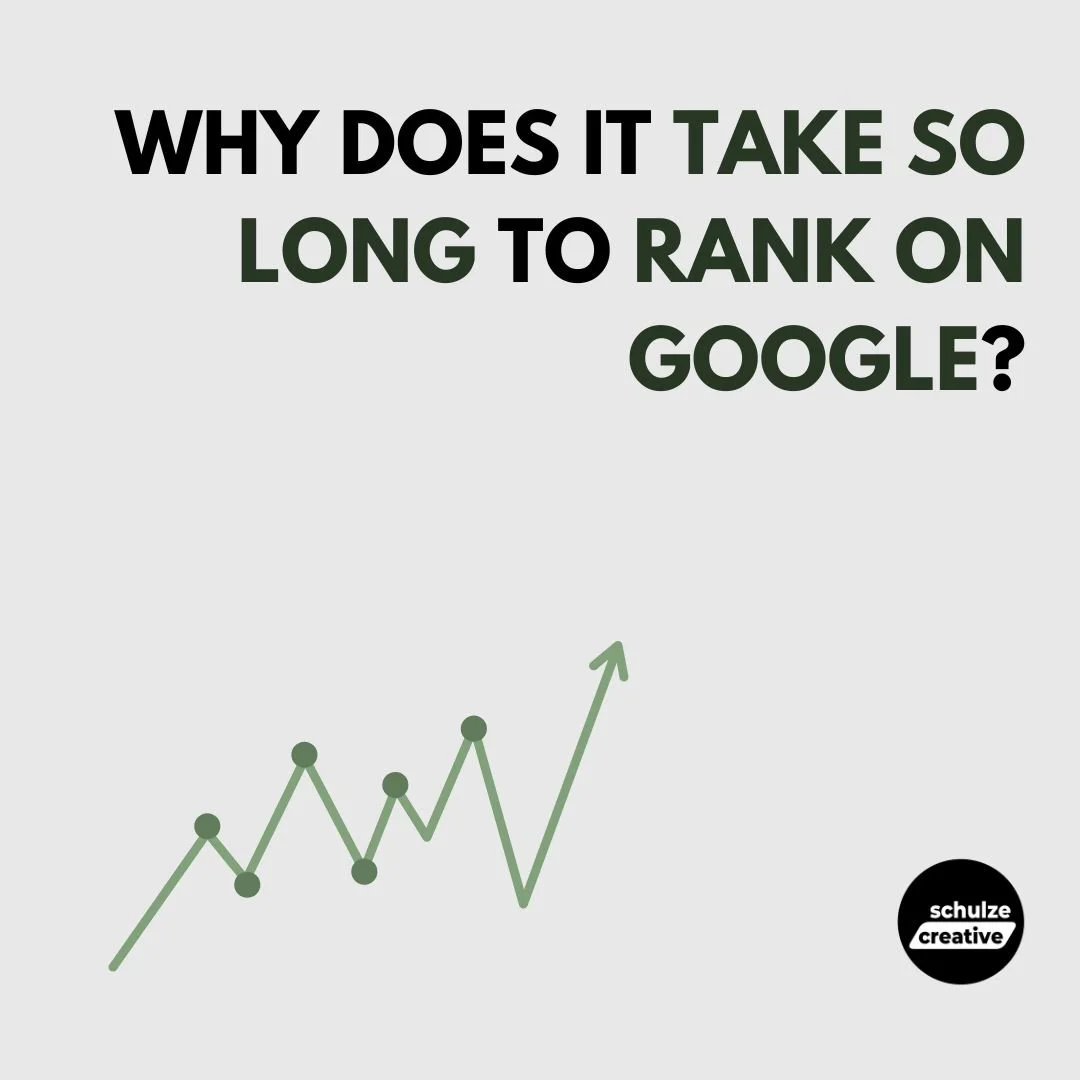
SEO doesn’t grow in a straight line. It grows like a snowball rolling downhill.
Small early progress becomes momentum later.
Why most businesses never see SEO work
There are a few consistent reasons home service businesses struggle with SEO results:
First, they expect meaningful results too early. If nothing significant happens in 90 days, they assume it’s not working.
Second, they don’t build enough long-tail content. Most leads come from very specific searches, not broad keywords.
Third, they underestimate backlinks. Without authority signals, Google has no reason to trust your site over competitors.
And fourth, they publish content without direction. Random blogs don’t build topical authority, they just add noise.
When these four things combine, SEO feels like it’s not working at all.
But the issue is not SEO. It’s structure.
A real example of SEO compounding in a home service business
We worked with a Denver HVAC company where the starting point was exactly what you’d expect: low visibility, minimal organic traffic, and almost no keyword rankings.
At the beginning, nothing dramatic happened. Rankings were slow. Traffic was low. Leads were inconsistent.
But over time, something important started to shift.
Long-tail keywords began ranking. Traffic started increasing steadily. And eventually, organic leads became a consistent part of their business.
The important lesson from this is not the end result. It’s the timeline.
Nothing was instant. Everything was cumulative.
That’s what SEO actually looks like when it works.
The biggest misconception about ranking on Google
A lot of SEO companies unintentionally create the wrong expectation.
They say things like: “Rank in 30 to 90 days.”
But what they usually mean is: “You might see early movement in 30 to 90 days.”
Those are very different things.
Based on real-world campaigns and broader industry data, a more accurate expectation looks like this:
In the first 3 months, you should expect movement, not results.In 3 to 6 months, you should expect patterns, not perfection.In 6 to 12 months, you should expect real, consistent growth.
Anything faster than that usually comes from low competition or existing authority, not shortcuts.
Why home service SEO takes longer than most industries
Home service businesses are in one of the most competitive SEO environments.
You’re not just competing with local companies. You’re competing with:
established contractors with years of authority
national lead generation websites
directories that dominate search results
So even if your content is better, Google still has to trust you enough to move you up the rankings.
That trust is earned over time.
How to actually speed up SEO (without shortcuts)
You cannot force Google to rank you faster, but you can remove friction.
The businesses that grow fastest usually do a few things consistently:
They start with long-tail keywords instead of trying to rank for everything at once. They build topical authority instead of publishing random content. They earn quality backlinks instead of chasing volume (grab 10 free backlinks here). They strengthen internal linking so Google understands their site structure. And most importantly, they focus on search intent, not just keywords.
This is exactly the approach we use inside our LeadFlow Blueprint at Schulze Creative.
It is designed to connect SEO, content, and conversion so rankings don’t just create traffic, they create leads.
And by the way, this is what we do at Schulze Creative.
Why SEO is still worth it even though it takes time
Here’s the part most people miss.
SEO feels slow at the beginning, but it becomes one of the most valuable marketing assets over time.
Unlike ads, SEO does not reset when you stop spending. It continues working. It compounds. It builds equity in your business.
So yes, it takes time.
But what you get in return is not temporary attention. It is long-term visibility that does not disappear overnight.
Final Thoughts: Why Does It Take So Long to Rank on Google?
SEO feels slow for most businesses because the early stage hides the progress that actually matters. Google is not just ranking pages. It is building a trust profile for your entire website, and that process takes time.
What looks like inactivity in the first few months is actually Google collecting signals, testing your pages, and deciding where you belong in the search results. Once that trust starts to build, rankings do not move linearly. They compound.
That is why the real shift usually happens after months of consistent effort, not weeks.
For home service businesses, this is especially important. Competition is high, authority matters, and shortcuts rarely work. The businesses that win are the ones that stay consistent long enough for the snowball to form.
So if SEO feels slow right now, it is worth reframing the expectation. You are not waiting for it to start working. You are in the phase where it is being built.
And once it builds, it tends to keep working long after the effort slows down.
FAQ: Why Does It Take So Long to Rank on Google?
How long does it take to rank on Google?
Most websites start seeing early movement in about 3 months, noticeable trends in 3 to 6 months, and meaningful results in 6 to 12 months depending on competition and authority.
Why does Google take so long to rank new websites?
New websites have no trust history. Google needs time to evaluate content quality, backlinks, engagement signals, and consistency before ranking them competitively.
Can you rank on Google in 30 days?
Sometimes, but usually only for very low competition keywords. For most real home service keywords, 30 days is not enough time to build authority.
Why is SEO slower than ads?
Ads are paid placement. SEO is earned placement. One is instant, the other is based on trust and performance over time.
Does more content help you rank faster?
Only if it is strategic. Content needs to build topical authority and target real search intent. Random content does not speed up rankings.
How does Schulze Creative approach SEO differently?
At Schulze Creative, we focus on building systems, not just rankings. Through our LeadFlow Blueprint, we combine SEO, Google Ads, and branding so businesses don’t just rank higher, they become the obvious choice in their market.
